
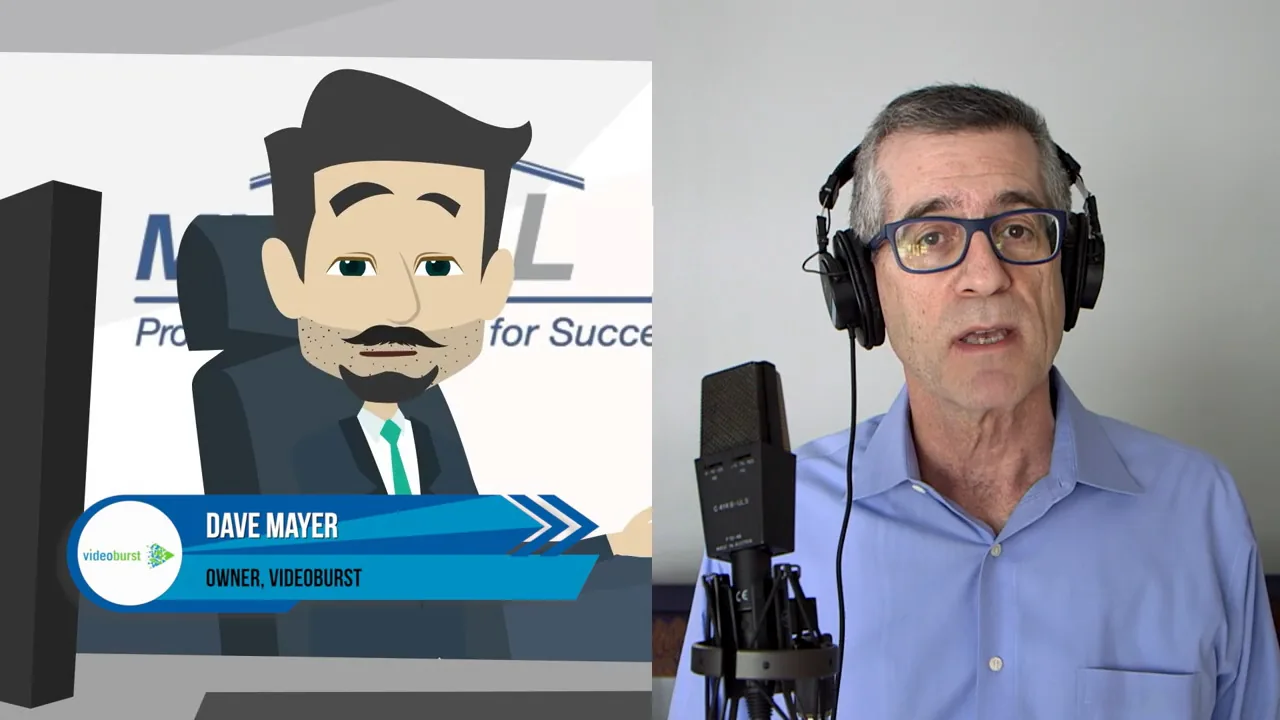
What Is Video Production?The Complete Guide [2026]
 David Mayer — Founder, Videoburst — April 9, 2026
Most videos fail before the camera ever turns on.
I’ve watched it happen hundreds of times over 35 years in this business. A company spends real money on a shoot day, brings in a crew, and walks away with footage that never quite says what they needed it to say. Not because the camera work was bad. Not because the lighting was off. But because no one asked the right questions before any of that started.
That instinct to ask first and shoot second came from journalism. Before I founded Videoburst, I spent four years as a journalist at The Prague Post in the early 1990s. Reporting taught me that the story is almost never the one you think you’re walking into. You discover it by listening. That lesson has shaped every project I’ve touched since, from automotive launch films for Detroit-area clients to training videos for healthcare systems across Oakland County.
This guide explains what video production actually is, how the process works from start to finish, what it costs, and what separates a video that moves people from one that just plays.
What is video production?
Video production is the end-to-end process of creating professional video content, from concept development through filming to final edit. It follows three stages: pre-production (planning, scripting, and storyboarding), production (shooting footage and recording audio), and post-production (editing, color grading, and sound mixing). Video production serves marketing, training, corporate communication, and entertainment needs across all platforms and industries.
That definition is technically accurate. But it leaves out the part that actually matters.
Video production is fundamentally an act of communication. The cameras, the lights, the editing software: those are instruments. Like any instrument, they only matter in the hands of someone who knows what they’re trying to say. I spent years as a jazz pianist before I got serious about production, and the parallel has always struck me. You can play every note correctly and still miss the feeling entirely.
The best corporate videos we produce at Videoburst don’t feel like corporate videos. They feel like conversations: direct, human, credible. That doesn’t happen by accident. It happens because of what takes place before the shoot, the discovery process, the questions, the writing, and the preparation that most people underestimate or skip.
When I started in this industry in the early 1990s, we were editing on tape. Linear editing meant you assembled your program from beginning to end. If you wanted to change something in the middle, you often had to redo everything that followed. It forced a discipline that modern production sometimes lacks: you had to know your story before you sat down at the edit bay, because fixing it later was genuinely painful. Today’s tools are extraordinary. But they can create an illusion that problems in production can always be fixed in post. They usually can’t.
Why video production matters for your business
Video is the dominant format for business communication. According to Wyzowl’s annual State of Video Marketing report, 91% of businesses now use video as a marketing tool, and 87% report a positive return on investment.
For businesses in Southeast Michigan, the stakes feel particularly high right now. Automotive, manufacturing, healthcare, and technology companies are all rethinking how they communicate with customers, employees, and partners. A well-crafted video isn’t a luxury line item. It’s infrastructure for your message.
At Videoburst, we’ve held a guiding philosophy since the beginning: short and pack a punch. A video that respects your audience’s time and says exactly what it needs to say, without padding, almost always outperforms one that runs twice as long. Brevity is not a budget consideration. It’s a creative principle.
The three stages of video production
Every professional video project moves through three distinct stages: pre-production, production, and post-production. Understanding what happens in each stage helps you make better decisions and get more from your investment.
Pre-production: where the real work happens
Pre-production is the planning phase, and it is where 80% of the final result is determined. This is the stage where we develop the creative brief, write the script, build the storyboard, scout locations, cast talent or identify interview subjects, and handle logistics like permits and scheduling.
I’m direct with every client about this: if pre-production is rushed or skipped, the shoot suffers. And if the shoot suffers, no amount of editing will save it. The questions we ask before we ever touch a camera are the most important part of the project. Who is the audience? What do we want them to feel, believe, or do after watching? What is the single most important thing this video needs to communicate?
A creative brief is the document that holds the answers to those questions. It aligns the production team with the client before a single frame is captured. When a creative brief is thorough, shoot days run smoother and edits move faster.
Scriptwriting follows the brief. For interview-driven pieces, we may write question guides rather than word-for-word scripts. For commercials or explainer videos, we write the script in full before anything else happens. Either way, the words come before the images.
Storyboarding visualizes the script. It doesn’t require artistic talent: it requires thinking clearly about sequence, camera angle, and pacing. Even a rough storyboard prevents expensive misunderstandings on set.
Production: what a shoot day actually looks like
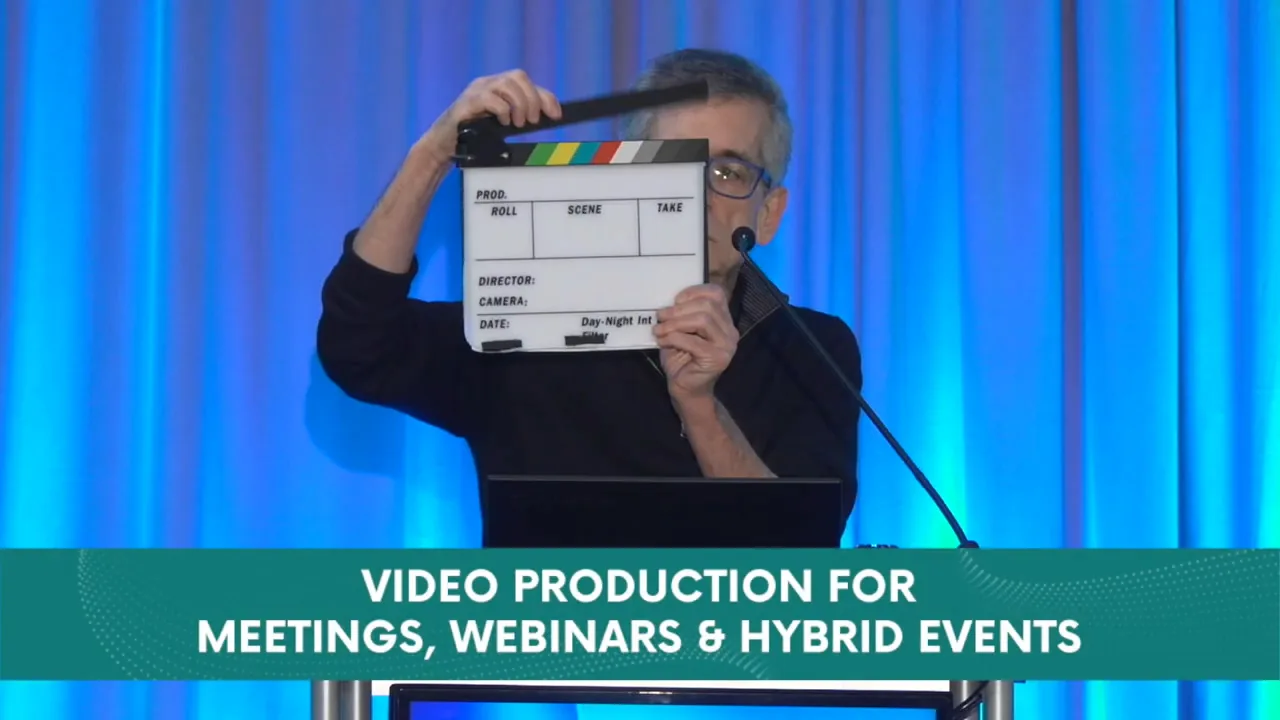
Production is what most people picture when they think of video production: lights, cameras, crew, action. A professional shoot day is organized around a call sheet, a detailed schedule that tells every crew member where to be and when, what equipment is needed, and what scenes are planned for each block of time. Nothing about a professional shoot should feel improvised.
The video production crew varies depending on the scale of the project:
- Director: responsible for the overall creative vision, working with talent, and guiding performance.
- Director of Photography (DP): designs and executes the visual look of the piece. Responsible for camera, lenses, and lighting.
- Gaffer: head of the lighting department. Translates the DP’s lighting plan into practical setup.
- Grip: handles the physical rigging of lights, camera support, and flags.
- Sound mixer: captures clean, professional audio on location. Bad audio cannot be fixed in post. Good audio is invisible.
- Line producer: manages logistics, budget, and schedule during production.
For camera systems, we work with formats suited to the project: Sony FX series for corporate and documentary work, RED or ARRI for higher-end commercial productions. B-roll, the supporting footage that plays over interview audio, is often what makes or breaks the feel of a piece.
Post-production: editing, color, sound, and delivery
Post-production begins when the camera cards come back from set. The editorial workflow moves from a rough cut to a fine cut to picture lock: the final edit approved by the client, from which no further changes are made.
Once picture is locked, the finishing processes begin. Color grading adjusts exposure, contrast, saturation, and visual mood, most commonly in DaVinci Resolve. Sound design blends dialogue, music, and effects into a coherent mix. Motion graphics and lower-thirds are added using Adobe After Effects.
Music licensing is handled in post. As a musician myself, I take music selection seriously. The wrong track can undermine everything else you’ve built. Final deliverables include 4K masters, platform-optimized exports for YouTube and LinkedIn, and captioned files for accessibility.
Types of video production
- Corporate and brand video: tells the story of who a company is, its culture, values, and capability.
- Commercial and TV spots: crafted for broadcast or digital ad placement. A 30-second commercial is not easier to produce than a 3-minute film. It’s harder.
- Explainer and animated video: uses motion graphics or full animation to break down complex subjects like SaaS products or technical manufacturing processes.
- Training and educational video: replaces or supplements in-person instruction. We have deep experience producing training films for manufacturing and healthcare clients in Michigan.
- Testimonial video: real customers speaking genuinely about real results. Consistently outperforms scripted promotional videos.
- Event and live streaming: conferences, product launches, town halls, ceremonies. Technical precision is essential because there are no second takes.
- Documentary video: follows a subject, an issue, or a story over time.
- Social media and short-form video: where our burst philosophy is most directly applied. Built for the platform from the first frame, not adapted afterward.
- Real estate video: drone footage, interior walkthroughs, and neighborhood context for residential and commercial listings.
- Government and public sector video: municipal communication, public safety campaigns, and community outreach.
Video production vs. videography: what’s the difference?
Video production is a multi-stage, crew-based process involving planning, shooting, and post-production. Videography typically refers to a single operator capturing footage at an event, with minimal pre-production and light editing.
Videography is appropriate for event documentation: a conference, a ceremony, a trade show. Video production is appropriate when the goal is persuasion, instruction, or storytelling. It involves a team, a plan, a script, and a deliberate editorial process. The difference is not just crew size. It’s the level of intention brought to every decision.
I’ve seen companies hire a single-operator videographer for a project that genuinely needed a production team, and the results disappointed them. Matching the format to the goal is part of what an experienced production company helps you figure out.
How much does video production cost?
Video production cost varies widely, and any company that gives you a price before understanding your project isn’t giving you a real number. Here is an honest range based on our experience.
| Project type | Typical range | Notes |
|---|---|---|
| Corporate testimonial video | $3,000 – $10,000 | 1–2 subjects, half-day shoot, professional edit |
| Corporate overview / brand film | $8,000 – $20,000 | Multi-location, full-day shoot, motion graphics |
| Training video (per module) | $5,000 – $15,000 | Complexity and length drive the range |
| Full commercial production | $15,000 – $50,000+ | Scripted, multi-location, full crew, original music |
Five factors most affect where your project lands:
- Scope: length, number of shoot days, number of locations, and number of deliverable formats.
- Crew size: a two-person crew for a simple interview costs far less than a full production team.
- Location: travel time, location fees, permits, and equipment transport.
- Equipment: specialty grip, drone rigs, and teleprompters all add to the total.
- Post-production complexity: animation, complex color work, sound design, and multiple revision rounds add significant time and cost.
What should not be scaled back: pre-production time, audio quality, and editorial craft. These are the things you notice most when they’re missing.
How long does video production take?
For a typical corporate video, plan for three to six weeks from kick-off to delivery.
- Pre-production: one to three weeks for most corporate projects.
- Production: typically one to three shoot days for corporate work.
- Post-production: one to three weeks, including at least two rounds of client review.
Factors that extend timelines most often: slow feedback from the client side, last-minute script changes after production has begun, and scope that grows after the project starts. My advice: add a week of buffer to whatever timeline seems reasonable. You’ll almost never regret having it.
How video production has evolved over 35 years
When I started in this industry in the early 1990s, we were editing on tape. S-VHS. Betacam. Linear editing suites where you assembled your program from beginning to end. If the client wanted to change the opening, you often rebuilt the entire edit. The equipment was heavy, expensive to rent, and unforgiving.
Digital non-linear editing changed everything. Suddenly you could rearrange, trim, and experiment without destroying your source material. But it also created a new problem: because you could try everything, some editors started trying everything. The discipline of committing to a structure before sitting down to cut began to fade.
What has not changed in 35 years is this: story matters more than everything else. The subjects who are most compelling on camera are not the best-looking ones or the most polished speakers. They’re the ones who believe what they’re saying. My job is to find that person, earn their trust quickly, and give them space to say something genuine. That’s journalism. That’s also the best video production I know how to make.
My background as a jazz musician shapes how I think about editing more than most people would expect. In jazz, you’re constantly making decisions about time: when to play, when to rest, how long to hold a note before releasing it. Editing is the same. The pause before a key line. The cut that arrives one beat earlier than you expect. Rhythm in editing is not a metaphor. It’s a technical reality that separates a piece that flows from one that drags.
AI-assisted workflows are now part of post-production in real, practical ways: automated transcripts, noise reduction tools, and color matching algorithms that compress hours of work into minutes. I use these tools. But AI doesn’t know what your story is. It doesn’t know which moment in an interview is the one that will make someone stop scrolling. That judgment is still human.
Video production in Southeast Michigan
Southeast Michigan is a compelling and complex market for video production. The region’s economy is deep and diverse, anchored by automotive but not defined by it anymore.
The automotive industry remains central to the area’s identity. Stellantis has its North American headquarters in Auburn Hills. The broader Detroit automotive corridor, including suppliers, technology companies, and engineering firms, generates substantial demand for product launch films, training videos, dealer communications, and executive messaging. I have been producing video for automotive-adjacent clients in this region for many years. The work requires precision in technical language, respect for brand standards, and the ability to operate efficiently in manufacturing and engineering environments.
Healthcare is the second major sector we serve. Michigan has significant hospital systems and healthcare networks throughout Oakland County and the broader metro region. Training video production for healthcare clients has particular requirements around accuracy, compliance, and sensitivity.
Manufacturing, defense and military contracting, SaaS and technology companies, senior living communities, local government, and real estate developers round out the industries we serve regularly across Troy, Novi, Birmingham, Auburn Hills, and the wider Detroit metro area.
Our headquarters in Troy puts us at the center of Oakland County’s business community. We know the region, we know the facilities, and we know the clients who operate here. For any business in Southeast Michigan exploring video production for the first time, I’d encourage you to learn more about what we do as a video production company in Troy, Michigan.
Frequently asked questions about video production
What are the 3 stages of video production?
The three stages are pre-production, production, and post-production. Pre-production covers all planning: scripting, storyboarding, location scouting, and logistics. Production is the shoot itself, when footage and audio are captured. Post-production is where the edit, color grading, sound mixing, and delivery formats are completed.
What does a video production company do?
A video production company manages the full process of creating professional video, from the initial concept and script through filming and final delivery. A full-service company brings the creative strategy, the crew, the equipment, and the editorial expertise. The client’s job is to provide access, information, and timely feedback.
What is pre-production in video production?
Pre-production is the planning stage that happens before any filming begins. It includes developing the creative brief, writing the script, building the storyboard, scouting and securing locations, and managing all logistics. Skipping or rushing pre-production is the most common cause of expensive problems on shoot day.
What is the difference between video production and videography?
Video production is a multi-person, multi-stage process with distinct pre-production, production, and post-production phases. Videography typically refers to a single operator capturing footage at events with minimal pre-production and lighter post-production. Video production is appropriate for scripted or story-driven projects. Videography is appropriate for event documentation.
What is the difference between video editing and video production?
Video editing is one component of the post-production stage of video production. Video production is the complete process that includes planning, filming, and editing. Editing alone cannot produce a professional video: it depends entirely on well-planned and well-captured footage to work with.
What equipment is used in video production?
A professional video production kit includes camera systems (Sony FX series, RED, or ARRI), lighting equipment (LED panels, HMI, tungsten fixtures), audio capture gear (lavalier and boom microphones, field recorders), camera support (tripods, sliders, jibs, gimbals), and post-production workstations running DaVinci Resolve or Adobe Premiere Pro.
How much does video production cost?
A corporate testimonial video typically costs between $3,000 and $10,000. A fully produced commercial runs from $15,000 to $50,000 or more. The five largest cost variables are scope, crew size, location complexity, equipment requirements, and post-production depth.
How long does video production take?
Most corporate video projects take three to six weeks from kick-off to final delivery. Pre-production takes one to three weeks. Production runs one to three days for most corporate work. Post-production takes one to three weeks including client review rounds.
What skills do you need for video production?
A well-rounded production professional needs skills in storytelling and script development, camera operation, lighting design, sound capture, project management, and post-production editing. At a leadership level, journalistic instincts, the ability to find a story and ask the questions that reveal it, are more important than any technical certification.
Is video production the same as filmmaking?
Video production and filmmaking share the same fundamental process and techniques. Filmmaking typically refers to narrative or artistic work for theatrical or festival release. Video production typically refers to content created for business, marketing, training, or communication. The craft is identical. The commercial context is different.
After 35 years of making videos, I’ve come to believe that the companies that get the most value from video are the ones who treat it as communication, not production. If you’re planning a video project and want to avoid the most common mistakes I’ve seen over three decades, let’s start with a conversation.
Call us at (248) 935-0110 or visit our contact page to get in touch.
David Mayer is the founder of Videoburst (Mayer Creative Productions, Inc.), a video production company based in Troy, Michigan. He has been producing professional video since the early 1990s. Before founding Videoburst, he worked as a journalist at The Prague Post and built a parallel career as a jazz pianist and jingle composer. He holds a degree from the University of Michigan and a Teaching Certificate. Videoburst serves clients across Southeast Michigan including Auburn Hills, Novi, Birmingham, and the Detroit metro area.